April 2026 Readings

My progress is crawling to a halt this month, I'm just having trouble getting into a reading mood. Work is picking back up at the office, and I definitely don't have time to make any headway before leaving for the day. When coming back home I also have so much to do that I don't take the time to read. Overall, the pressure I'm putting on myself to read is detrimental, as it's not pushing me to read more, but just makes me feel guilty I haven't read more. I gotta find a way to make this more sustainable.
Universal War One – Denis Bajram
(Volume 3 to 6)
This is the rest of the series I talked about last month.
I get some very strong Dune influences here (shocker — a western sci-fi series with Dune as its inspiration? unthinkable) but more in the ideas and philosophy than in the actual story which is way better. Doing the opposite make for a very dull series (looking at you Sun Eater Series)
It's extremely cliché and overdone but I love the concept of time is immutable and is already the result of what time travellers have done/you are actively working to create the future you experienced from the past
This series was completed in 2006 and another was is being written since 2013. However, this second series, also to be 6 volumes long keeps getting delayed so I'll wait until it's completed to start it. The reason for this 13 year delay? The author is based as fuck. His series made him enough money that he was able to live off of it, but he noticed that all the other artist around him were living in deeper and deeper precarity. He therefore devotes most of his time campaigning for struggling artists and different writer trade unions.


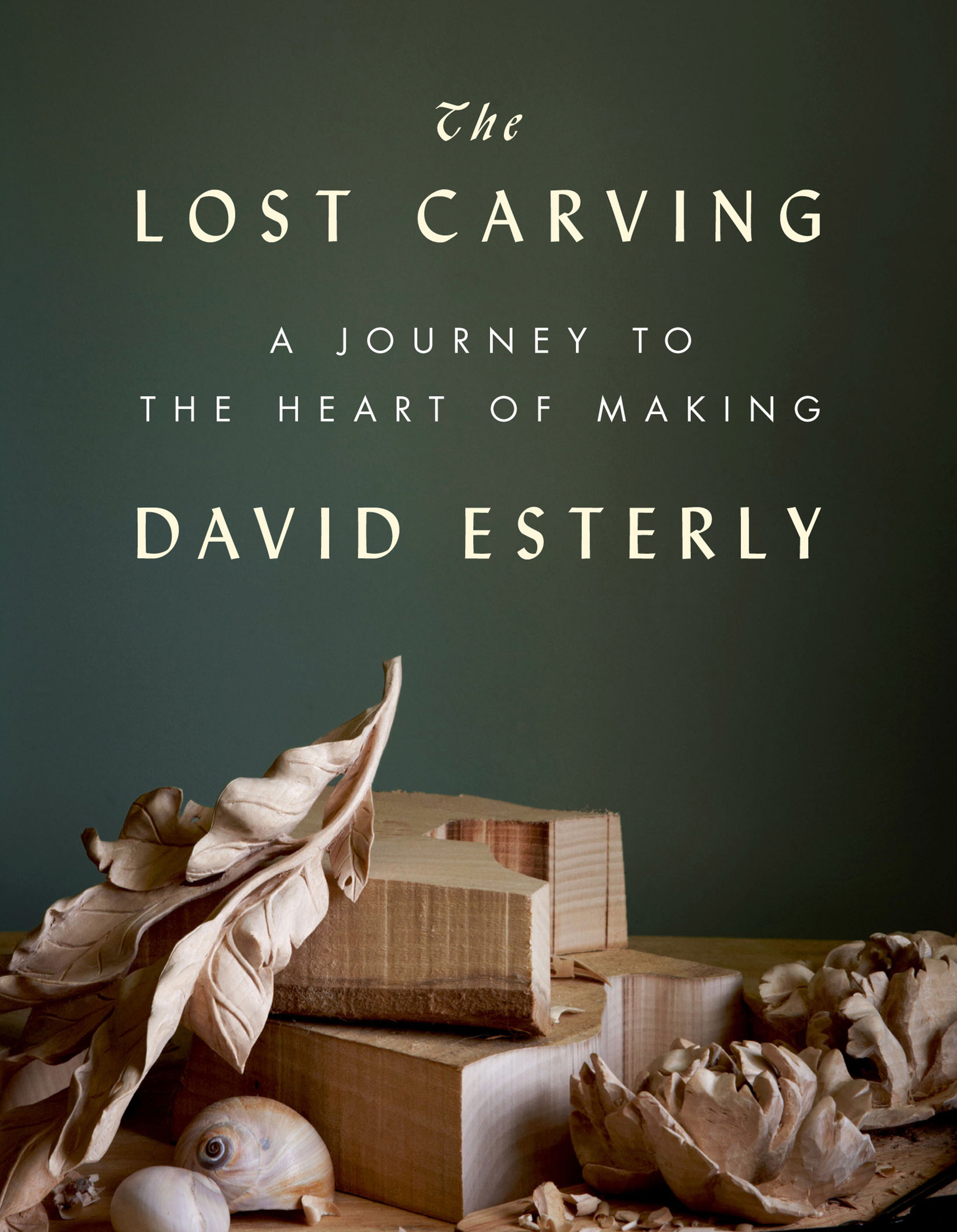
The Lost Carving – David Esterly
A book I picked up in Sudbury when we went to visit Shrey like, two years ago.
In 1986 a fire breaks out at Hampton Court, a palace from the 16th century most famously inhabited by Henry VIII. It doesn't spread rapidly, and caretakers of the building manage to remove all the works of art hanged around the place. All? No. Carvings from Grinling Gibbons, decorating the King's Chamber — an addition from William III — were nailed to the wall high up, inaccessible, and were not saved from the inferno. Fortunately, the fire didn't spread extensively and firefighters were able to contain some of the destruction. Only some. While the edge carvings suffered some relative destruction, some minor burns, smoke and water damages, the central section was completely incinerated. Our author, an american carver and one of the foremost Gibbons expert, is devastated. Talks of restoration spring up immediately following the fire, and David wants to be involved. Will he be chosen to be among the few leading the restoration efforts of this specific Chamber?
First, I want to say that 'Grinling Gibbons' sounds like the name of a subspecies of tiny monkeys.
Lar Gibbon, a distant cousin of the Grinling Gibbons
The book is very pompous at the beginning, but in an deliberate and acknowledged way. The author also goes on very long and flowery tangents and some timeline shift sometimes hard to follow — present time when he's writing, past when doing project, further past when anecdotes happen — those do not flow seamlessly and are a bit confusing.
I found it so funny how the carvers taking part in the restoration get pressed over the littlest things upon inspection. One of the most memorable situation is: Guy who had been studying Gibbons all his life and was extremely against sandpaper — only smoothing surface tediously with a chisel because that's how the great masters, like Gibbons, did it — and admonishing everyone who uses sandpaper for decades, realises upon being able to inspect and manipulate Gibbons carvings up close that he used abrasive material to smooth his carving. His world ends.
The art history research aspect of the book was very interesting; did this carving always have that varnish? was it treated in that way? sandpaper didn't exist — what abrasive did Gibbon use for his carvings? it turns out it was mounted upside down 50 years ago when there was this and that exhibition, surely it should be placed back right side up?, should we restore the wood it to its original whiteness or darken it to simulate the older look it had before restoration...?
Also it was made clear very early on in the book that we do not belong to the same social class. All the situations he describes in the book seem inconceivable to the peasant that I am. On his application to take part in the restoration effort, he says: “someone at the royal conservatory overseeing the restoration of the project during my application was giving me issues about not being british, so I called a friend who was sitting at the british parliament and he fixed it for me” And also labour as he's describing it sounds like a dream: “My work project is something I'm passionate about, I was given board a mere 5min walk away from my place of work in a british castle and anything else I might need. I have my own office and I worked with an expert to build a tailored workbench for myself. We first got to know the place and talk about the work we were gonna do with experts and some other people who are also working on that same thing. Two month after my work start date I actually started working. If I have an issue, I can stop what I'm doing until I figure it out, and and can go to my colleagues, peers or the administration to discuss about it. At the same time I was advocating for some other cause that I was deeply passionate about. Everybody ended work early, and then went on the lake to do some rowing. We had questions about something work related so we invited someone who had worked on that thing before, took him to dinner and when business was done we went to the pub”. And the social circles he evolves in: “I went to a couple of parties and then I talked about an exhibition I wanted to do and my hostess phoned the prince of Wales directly and he picked up and they talked for 15min about my exhibition and then the Prince wanted to host it at his castle”.
Bro also comes out of nowhere with a take that nowadays art has over-intellectualised itself, and moved away from the material to the mind. From the conceptual rather than the conception. He takes the example of one artist (he sites him multiple times so I'm sure he has a bone to pick with him) creating a design digitally, choosing the medium based on taste and sending it to some other artisans to craft. David (we're on a first name basis) argues that the restrictions imposed by the medium (wood for instance) during the creation process, which informs and even shapes the design is an important part of art. I don't know what to think of the take. Instinctively I would agree, taking the material entirely out of the artistic process seems creatively limiting, and almost inhuman (in terms of cold, calculated and unfeeling), and outsourcing the entire material creation of your art to a third party seems insane to me as well (I'm of course not talking about collaboration here). Also clarifying that here David makes seems to make a distinction between designers, for which the above would be totally normal, and more material artists like carvers and painters. And of course designers are artists too. But my artistic “expertise” is limited to the carving of crude little figures in wood, drawing very badly when I was a kid, and playing bass (not well) a couple years ago, so I will reserve judgement.
Very good overall, I did not expect to enjoy it this much. It was surprisingly mostly not about the carving, the author doesn't even pick up a gouge before the middle of the book. It all feels very personal and human which i appreciated.
L'Homme qui marche – Jiro Taniguchi
This is a slice of life manga, nothing happens (not derogatory). It was very nice and refreshing. We follow a man about which we know nothing. We just goes on walk, he appreciates life. Nothing happens. It's just little stories without an overarching narrative. One story he gets of the train one stop early and does the rest of the way on foot. In another one he decides to follow a river for a while. My favourite is when he's out walking on a path and an older man with a cane overtakes him. He then proceeds to overtake the older man. Who in turns overtakes him again. Not a word is said. At one point, while the older man is ahead, they are separated by a passing train — our protagonist, unless he does an uncomfortable power walk probably has lost the race. But the older man is waiting for him behind the track, and only sets off again when our guy has almost reached him.
There's a lot a quiet contemplation here, and there's little to no dialogues. There's also bunch of things that are relatable in an almost universal way. Very nice and relaxing “read”.

Sophie's World – Jostein Gaarder
Sophie is a regular norwegian girl who starts receiving letters from a stranger. This stranger has one goal: teaching Sophie western philosophy. Every days she gets a new letter with a new lesson.
This is the first book I DNF'ed for this project, at about the halfway point. While I enjoyed the beginning, it started becoming a bit too contrived and the “philosophy” lessons were just not that interesting anymore. The linear treatment of philosophy through history is an unengaging angle in my opinion. I don't really care about the 'developments' in philosophy, and the famous people involved. Even as an introduction to philosophy, I find the angle very dry; “people at this time thought this, then this guy came around and thought this, then a century later people though that, and this other guy came around and thought that”. I don't know, it doesn't feel focused on philosophy, more on the history of western philosophy. It's also aimed at younger readers, like early teens. I thought the author also distractingly biased towards christianity, with for instance an insane “– How can you be sure that God exists? – You could discuss it of course. But nowadays most people agree to recognise that human reason is incapable of proving the contrary” thrown in the book during a lesson, to establish that god is real (and that lesson was not on sophistry).

I found another book hidden in a corner that I have added to my reading backlog, so now the total amount of pages to read is 20157 and the number of books is 61. I'm currently at 24/61 books read in the booklog, and at 8159/20157 pages — or 39% and 40% done respectively. We're still on track as 35% of the year has passed, but I'm gonna have to haul ass.
Thank you for reading my logorrhea Eddie – Award winning author